Neurodivergence has become a word that does a lot of work for very little precision.
I appreciate the underlying observation. Human nervous systems vary. Some people process sensory input differently, some have attention that drifts or hyperfocuses, some experience language, social cues, or motor coordination outside the narrow band that school and work were built around. Those differences are real, they show up early, and for a subset of people they create genuine friction with everyday demands. Calling that variation “neurodiversity” is a reasonable description of a population fact. Every brain is unique because of genetics, prenatal environment, early experience, injury, illness, nutrition, sleep, and a hundred other factors we can name and a thousand we cannot. There is no single normal neurology from which everyone else deviates.
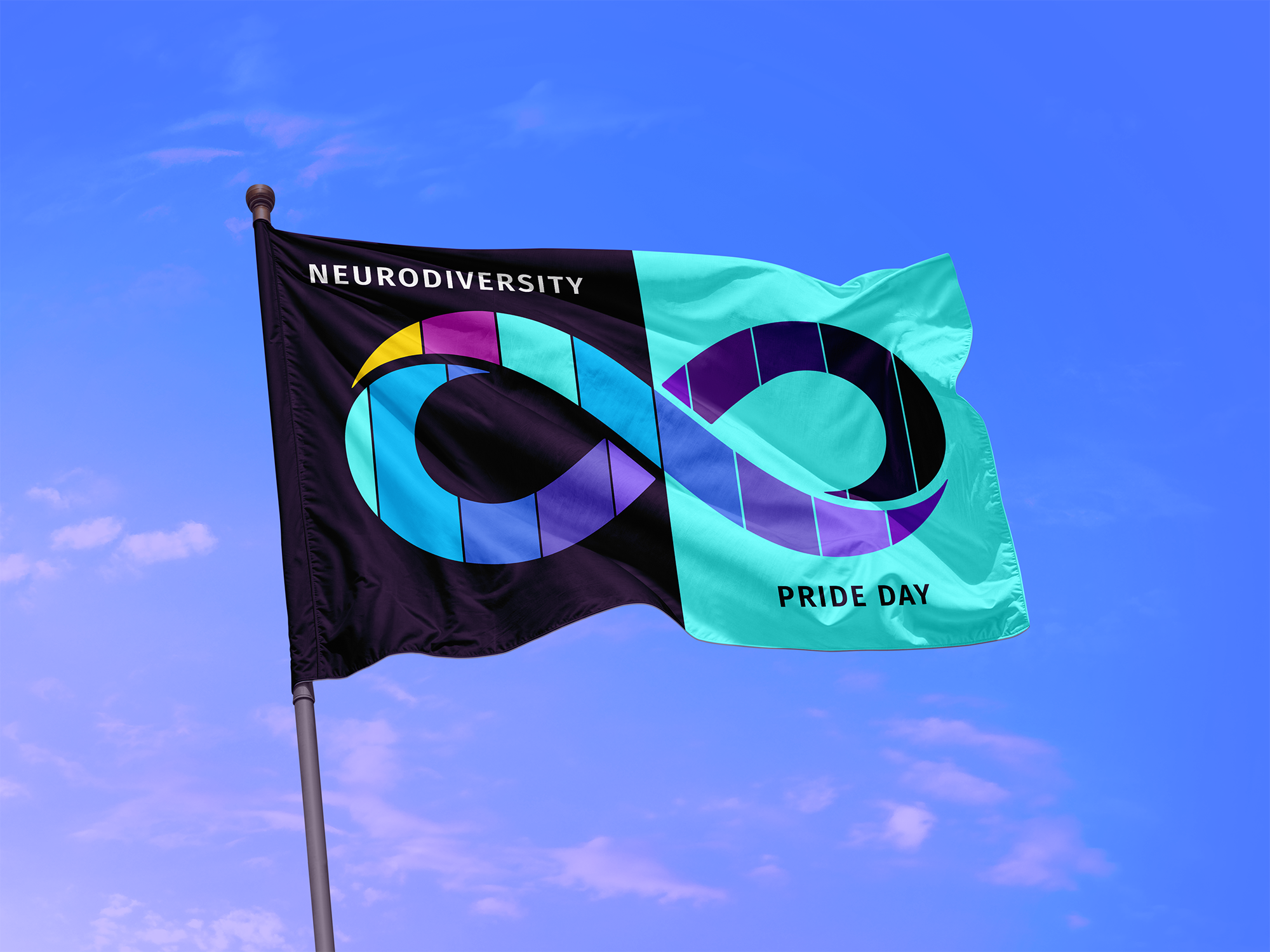
Here is the thing. Once you turn that population fact into a categorical identity, “neurodivergent people,” you have already left the population behind. You are no longer describing continuous variation. You are sorting people into an in-group and an out-group on the basis of a self-applied or clinician-applied label whose boundaries are not stable, not biologically discrete, and not independent of cultural expectations. The label absorbs ADHD, autism spectrum conditions, learning disabilities, sensory processing differences, and, increasingly, ordinary personality traits, anxiety, and the consequences of uneven schooling. It does so without requiring the distress or functional impairment that still defines most clinical categories. The result is a badge that can be claimed by almost anyone who finds school, work, or social life difficult, while the people who carry the most severe versions of those conditions become harder to distinguish inside the larger group.
Younger generations are the post-IEP generations. They grew up in systems that already translated difference into formal plans, 504 accommodations, and diagnostic categories. For many of them, the first language available for “I struggle with this” was a clinical or educational label rather than a description of skill, temperament, or circumstance. It reduced some of the raw shame that used to attach to struggling. It also trained a cohort to treat the label itself as explanatory and protective. When the same cohort later encounters the broader cultural language of neurodivergence, the move from “I have an IEP for reading” to “I am neurodivergent” feels continuous. The label expands, the threshold for belonging drops, and the original clinical distinctions thin out.
Using the term as a badge of identity carries costs. It encourages people to locate the source of friction primarily inside their neurology rather than in the interaction between their particular pattern of strengths and weaknesses and the specific demands in front of them. That can reduce motivation to practice skills that are trainable. It can turn ordinary social friction or ordinary under-preparation into evidence of a protected difference that others are obliged to accommodate without reciprocal adjustment. It can make disagreement about accommodations feel like an attack on the person rather than a discussion about what is workable. And it can crowd out attention to the smaller number of people whose differences are large enough, and stable enough, that standard environments truly do not fit without substantial redesign.
None of this requires denying that some brains are outliers or that some environments are poorly designed for those outliers. It only requires keeping the description at the level of the individual and the population rather than inventing a stable subpopulation whose members share an identity. The more the word is used as a membership card, the less it describes the actual distribution of human neurology and the more it functions as a social claim. That claim can be examined on its merits. It does not become more accurate by being repeated.

No comments:
Post a Comment